
An Overview of the Treatments Available
Non-surgical aesthetic treatment has changed considerably over the past decade. Procedures that once required an operating theatre, a general anaesthetic and several weeks away from work can now be carried out in a thirty to sixty minute appointment, with no incisions, no stitches and no recovery period. The technology has matured, the clinical evidence has broadened, and the practitioners delivering these treatments have accumulated years of practical experience across thousands of individual cases.
The treatments described on this page fall into four broad families. The first addresses stubborn fat that has not responded to diet and exercise. The second builds muscle and tone while reducing fat in the same session. The third strengthens the pelvic floor to address bladder control and related concerns. The fourth restores tone, comfort and structural support to intimate tissue. Each family works through a different physical mechanism, each suits a different set of concerns, and each has its own timeline, session count and list of people for whom it is not appropriate.
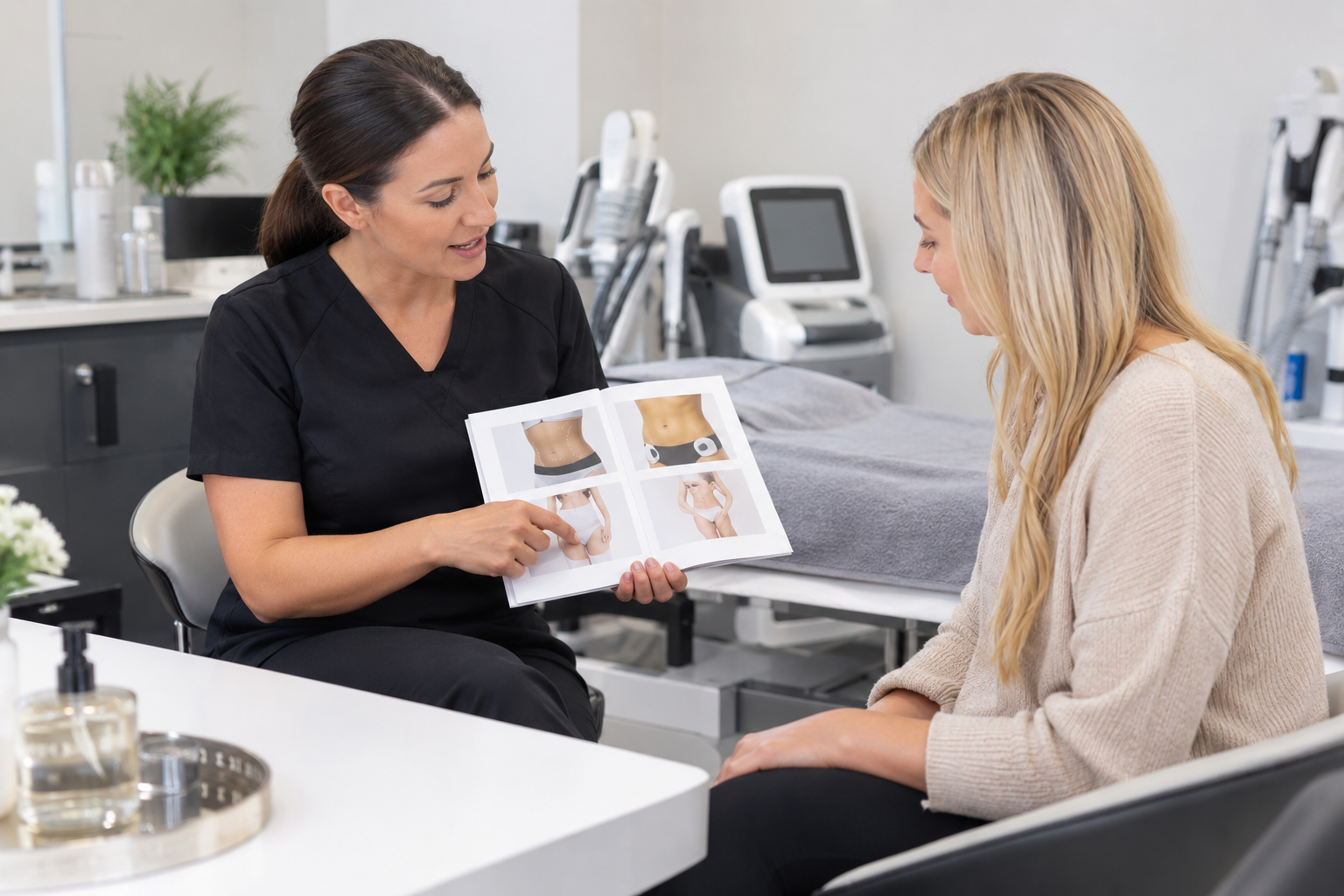
Every treatment at Lipo Freeze begins with a consultation. That consultation is not a formality and it is not a sales appointment. It is a clinical screening that establishes whether a treatment is safe and sensible for you specifically, given your medical history, your body composition and what you are hoping to achieve. Occasionally the honest answer at the end of a consultation is that a particular treatment is not the right choice, and that answer is given as readily as any other.
One further point worth stating clearly at the outset: none of these treatments is a weight-loss programme. They refine, contour, strengthen and restore. They work best for people who are already reasonably close to a stable weight and who have specific, localised concerns.
Fat Freezing Treatment (Cryolipolysis)
Cryolipolysis, widely known as fat freezing, is a non-surgical fat reduction treatment that uses precisely controlled cooling to target and destroy pockets of stubborn fat that have not responded to diet or exercise. It is the treatment most closely associated with the Lipo Freeze name, and it remains the most requested procedure for people whose primary concern is contour rather than overall body weight.
The principle behind it is straightforward. Fat cells are more sensitive to cold than the tissues that surround them — more sensitive than skin, muscle, nerve tissue or blood vessels. When fat cells are exposed to a carefully calibrated low temperature for a sustained period, they crystallise and begin to break down through apoptosis, the body's own process of programmed cell death. The surrounding structures, which tolerate that same temperature comfortably, are left unharmed.
What follows is entirely natural. Over the weeks after treatment, the lymphatic system gradually clears the damaged fat cells away and processes them through the body's normal metabolic pathways. Because this clearance is gradual, the change in contour appears slowly and looks like a natural refinement rather than an obvious intervention.
Targeted Cooling Technology
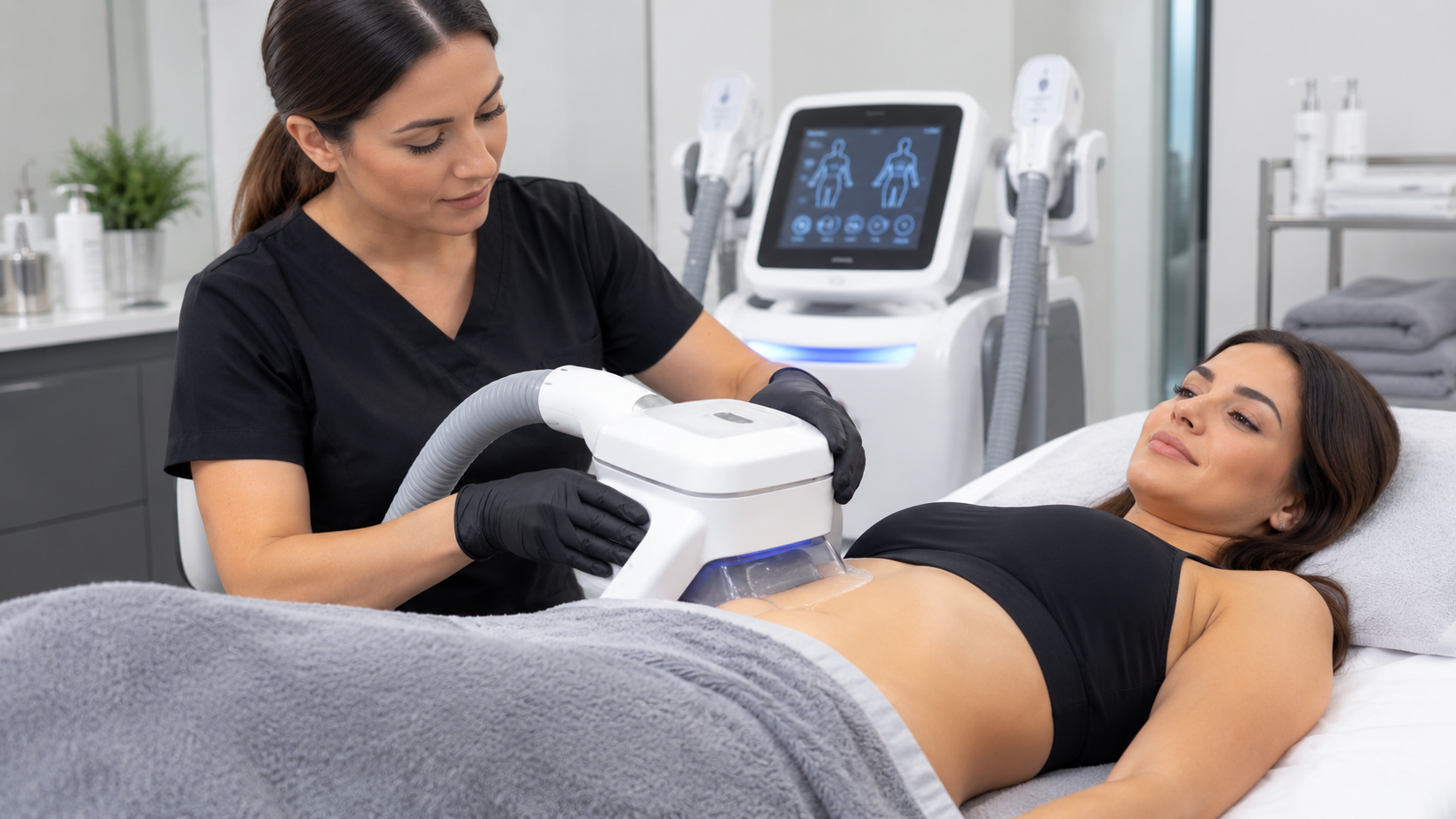
The session begins with a protective gel pad placed against the skin. This barrier serves two purposes: it protects the surface tissue from direct contact with the cooling plates, and it improves thermal conduction so that the cooling reaches the fat layer evenly. A specialised applicator is then positioned over the area to be treated. The applicator draws the fatty tissue gently into a cup using controlled suction, holding it in place and separating it slightly from the deeper structures beneath.
Once the tissue is secured, cooling begins. The temperature is brought down gradually to the level required to trigger apoptosis in fat cells, and held there for the duration of the cycle. The device monitors and maintains that temperature continuously, which is why certified equipment matters so much: the entire safety margin of the treatment depends on the device holding a precise temperature rather than drifting.
Selective Fat Cell Freezing
The selectivity of the treatment is what makes it viable without surgery. At the temperatures used, fat cells crystallise and begin to break down while skin, muscle and nerve tissue tolerate the exposure without lasting damage. This is not a matter of aiming carefully — it is a property of the tissue itself. The differential sensitivity to cold does the targeting, which means the treatment does not rely on the practitioner's precision to avoid harming surrounding structures.
Natural Elimination of Fat Cells
After the applicator is removed, the treated area is usually massaged briefly to help break up the crystallised tissue and encourage circulation. From that point onward, the process is handled entirely by your own body. The damaged fat cells are recognised as debris and cleared through the lymphatic system over the following weeks and months. Fat reduction continues long after you have left the appointment, which is why the results are described as developing rather than appearing.
What a Session Actually Feels Like
For the first five to ten minutes, most people describe an intense cold sensation combined with a pulling or tugging feeling as the applicator draws in the tissue. There may be mild tingling, aching or a sense of pressure. After that initial phase, the area becomes numb and the discomfort largely disappears. From that point on, most clients read, work through emails, use their phone or simply rest. Some fall asleep.
A typical session lasts between thirty and sixty minutes depending on the area being treated. When it finishes, you stand up and carry on with your day. There is no downtime, no dressing to manage and no restriction on driving, working or exercising. Some tenderness, redness or numbness in the treated area is common for a few days and occasionally up to a week or so.
Areas That Can Be Treated
Applicators are produced in a range of shapes and sizes, which is what allows the treatment to be adapted to different parts of the body. Commonly treated areas include:
- The lower abdomen, including the pocket below the navel that persists despite core training
- The upper abdomen and the area around the waistline
- The flanks, often described as love handles, on both men and women
- The lower back and the upper back, including the area around the bra line
- Inner thighs and outer thighs
- Upper arms, where fullness can make sleeveless clothing feel off-limits
- The area beneath the chin and along the jawline, using smaller applicators
Who Fat Freezing Suits
The strongest candidates are people who are at or close to a stable, healthy weight, who eat reasonably well and stay active, and who have specific localised fat deposits that have not shifted. These are the pockets largely determined by genetics and hormones rather than by effort. Men and women are equally suitable, and the treatment is frequently used by people who want contouring without anaesthetic, incisions or recovery time.
Who It Does Not Suit
Fat freezing is not appropriate for everyone. It should not be carried out on people with cold-related conditions including Raynaud's phenomenon, cold urticaria, cryoglobulinaemia or paroxysmal cold haemoglobinuria. It is not suitable where there is a hernia at or near the intended treatment site. It is not carried out during pregnancy or while breastfeeding. It is a poor choice where the skin is significantly loose or where there is too little fat in the target area for the applicator to draw tissue in properly. And where someone is substantially overweight, a weight-management approach is the more appropriate first step, with contouring considered afterwards if specific areas remain.
Side Effects and Rare Risks
The common side effects are temporary: redness, swelling, bruising, tenderness, tingling and numbness in the treated area, generally resolving within days to a couple of weeks. Rarer effects are discussed openly during consultation and include changes in skin pigmentation, either lighter or darker than surrounding skin, and cold injury, which is extremely infrequent when protocols are followed correctly.
The rare complication that receives the most attention is paradoxical adipose hyperplasia, in which the treated area develops more fat rather than less. It is uncommon, but it is real, and any practitioner who does not mention it during consultation is not giving you a complete picture. Knowing about a rare risk before treatment is part of informed consent, not a reason to be alarmed.
Preparing for Your Appointment
Preparation is minimal. Avoid applying lotions, oils or creams to the treatment area on the day of your appointment, since these interfere with the gel pad and the applicator seal. Wear comfortable, loose clothing that allows easy access to the area and that will not press uncomfortably against it afterwards. Arrive well hydrated, as good hydration supports the lymphatic clearance that follows. Attend the consultation beforehand so that your medical history, skin condition and fat distribution can be assessed properly.
How Many Sessions You Are Likely to Need
Many people achieve the result they wanted from a single session on a given area. Others benefit from a second or third, depending on the size of the deposit, the response of the tissue and how much change they are hoping for.
Body Toning Treatment
Body toning is best understood as two treatments delivered simultaneously. In a single thirty-minute session it builds muscle and reduces fat in the same area, which makes it fundamentally different from fat freezing. Fat freezing removes fat. Body toning removes fat and strengthens what lies beneath it.
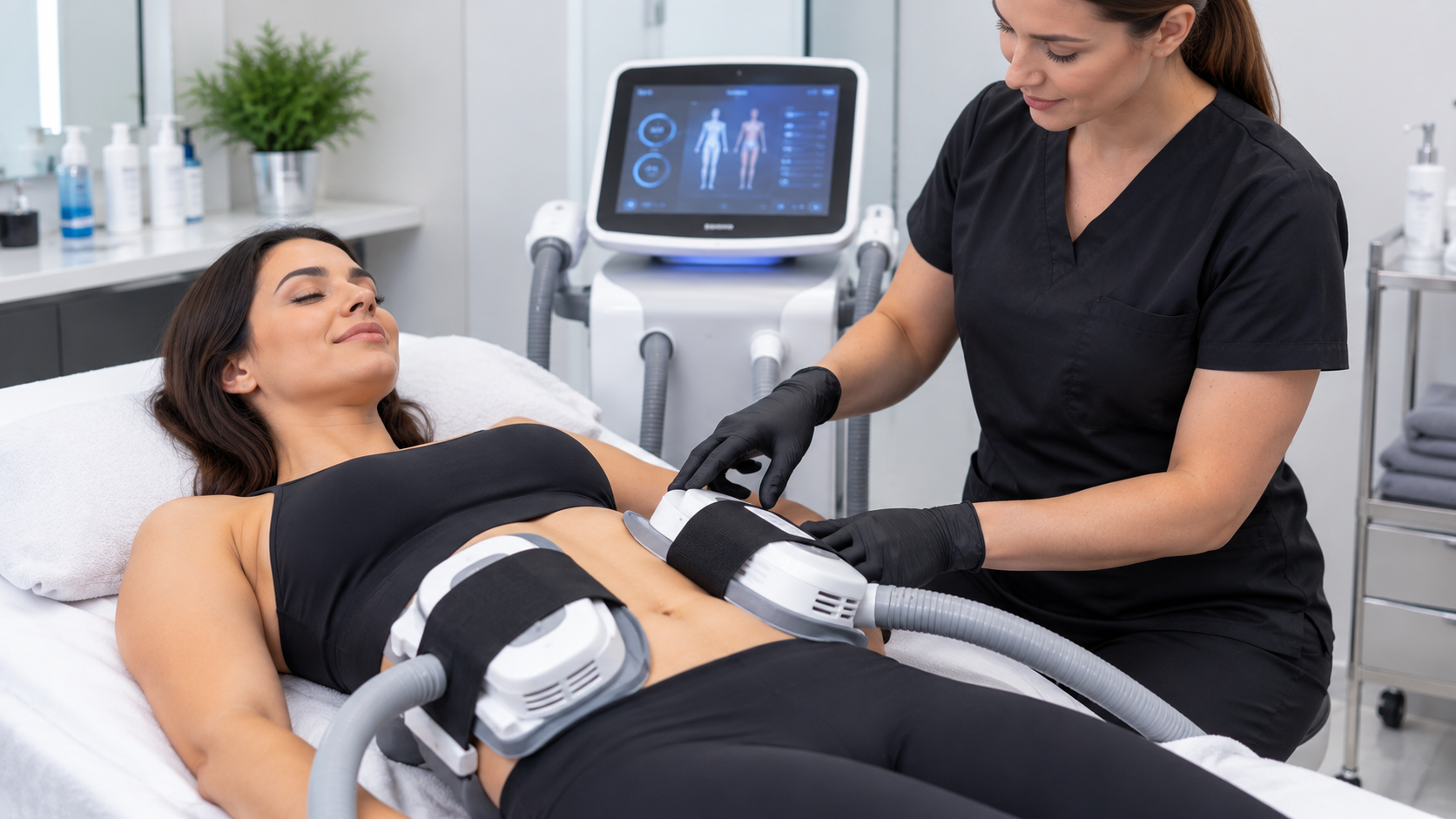
The technology uses high-intensity focused electromagnetic energy to trigger what are known as supramaximal contractions — muscle contractions far stronger and more frequent than anything achievable voluntarily. A single thirty-minute session can produce up to twenty thousand contractions. During a normal gym session, an amateur athlete voluntarily recruits roughly thirty-five to forty per cent of the available muscle fibres, and even a professional athlete typically reaches around fifty-five per cent. This technology contracts a far higher proportion of the fibres in the treated muscle.
Reported outcomes across treatment courses include fat reduction of up to nineteen per cent and an increase in muscle mass of up to sixteen per cent in the treated area. Those figures are averages drawn from treatment courses rather than guarantees for any individual, and your own result depends on your starting point, your consistency and your lifestyle afterwards.
How the Muscle Building Works
Muscle grows in response to demand. When a muscle is contracted repeatedly and intensely, the fibres adapt by thickening and by improving their capacity to generate force. The electromagnetic field used in body toning triggers those contractions directly, bypassing the voluntary nervous system and producing a level of recruitment that would be difficult or impossible to achieve through exercise alone. Over a course of sessions, this repeated supramaximal loading thickens the muscle fibres in the treated area, producing more definition and better underlying tone.
How the Fat Reduction Works
Alongside the muscle response, the intense contractions place a sharp metabolic demand on the tissue in the treated area. That demand contributes to the breakdown of fat cells overlying the muscle. The result is the dual effect the treatment is known for: less fat above and more muscle below, in the same thirty-minute appointment. Because fat cells that are destroyed do not regenerate, that component of the result is durable provided weight remains stable.
Areas Suited to Body Toning
- Abdomen — for core strength and definition through the midsection
- Buttocks — for lift and shape without surgery
- Hips and flanks — for contouring around the waistline
- Arms — biceps and triceps, for improved tone and firmness
- Thighs — front, back and outer thigh
- Calves — for building and defining the lower leg
Diastasis Recti
One of the more valuable applications of body toning is in the management of mild to moderate diastasis recti — the separation of the left and right sides of the abdominal wall that commonly follows pregnancy. The supramaximal contractions cause the rectus abdominis muscles to contract and relax repeatedly in a controlled pattern. Over a course of sessions this can thicken and strengthen the muscle fibres, improve tone and support better engagement of the deep core.
Injury Recovery Support
Body toning is also used to support recovery from muscular injury. The intensity of the treatment can be adjusted downward, and the controlled contractions stimulate the muscle, increase circulation in the treated area and support the healing process. It is used alongside physiotherapy rather than instead of it — the two work together, with the treatment supporting the muscle work while the physiotherapist manages the rehabilitation programme. Ongoing maintenance sessions may be appropriate as recovery progresses.
What a Body Toning Session Involves
A flat, wide paddle is positioned over the area being treated and secured. The session runs for approximately thirty minutes. During that time you will feel deep, powerful muscle contractions interspersed with a lighter tapping sensation between contraction cycles, which helps manage lactic acid. Some people describe a stinging or tingling feeling. It is intense but not painful, and the intensity is adjusted to your tolerance throughout.
Afterwards you return immediately to normal activity. There is no downtime and no recovery period. The treated muscle may feel tender in the way it would after a hard workout, but the delayed-onset soreness that follows heavy gym sessions is generally less pronounced. You will be asked to avoid strenuous exercise on the day before and the day after each session so that the muscle has time to recover between treatments.
Session Count and Timing
A typical protocol involves a course of sessions spaced at least a couple of days apart, with courses of four to six sessions common depending on the area and the goal. Increased muscle mass and strength in the treated area is generally noticed within two to four weeks of completing a course. Visible fat reduction in the treated area typically becomes apparent around three months afterwards. Muscle gains generally last at least six months and often longer where regular exercise is maintained; fat loss is expected to be durable where weight remains stable.
Who Should Not Have Body Toning
There is a clear list of circumstances in which body toning is not carried out. It is not appropriate for anyone with metal rods, pins, plates or orthopaedic implants in or near the treatment area, or with an intrauterine contraceptive device where the abdomen is being treated. It is not carried out during pregnancy or breastfeeding. It is not appropriate for people with bleeding disorders or taking blood-thinning medication, with pulmonary insufficiency, cardiac disorders, epilepsy or active malignancy. The device is not used near the chest, neck or head. It is not used where there is an active hernia, on anyone under eighteen, or where there is a muscle or soft tissue injury in the treatment area that has not been assessed.
Incontinence Treatment
A weakened pelvic floor affects bladder control. It causes leakage during coughing, laughing, lifting or exercise, and it contributes to the sudden urgency associated with an overactive bladder. It is extremely common, particularly after childbirth and around the menopause, and it is also common in men, especially where the prostate is enlarged.
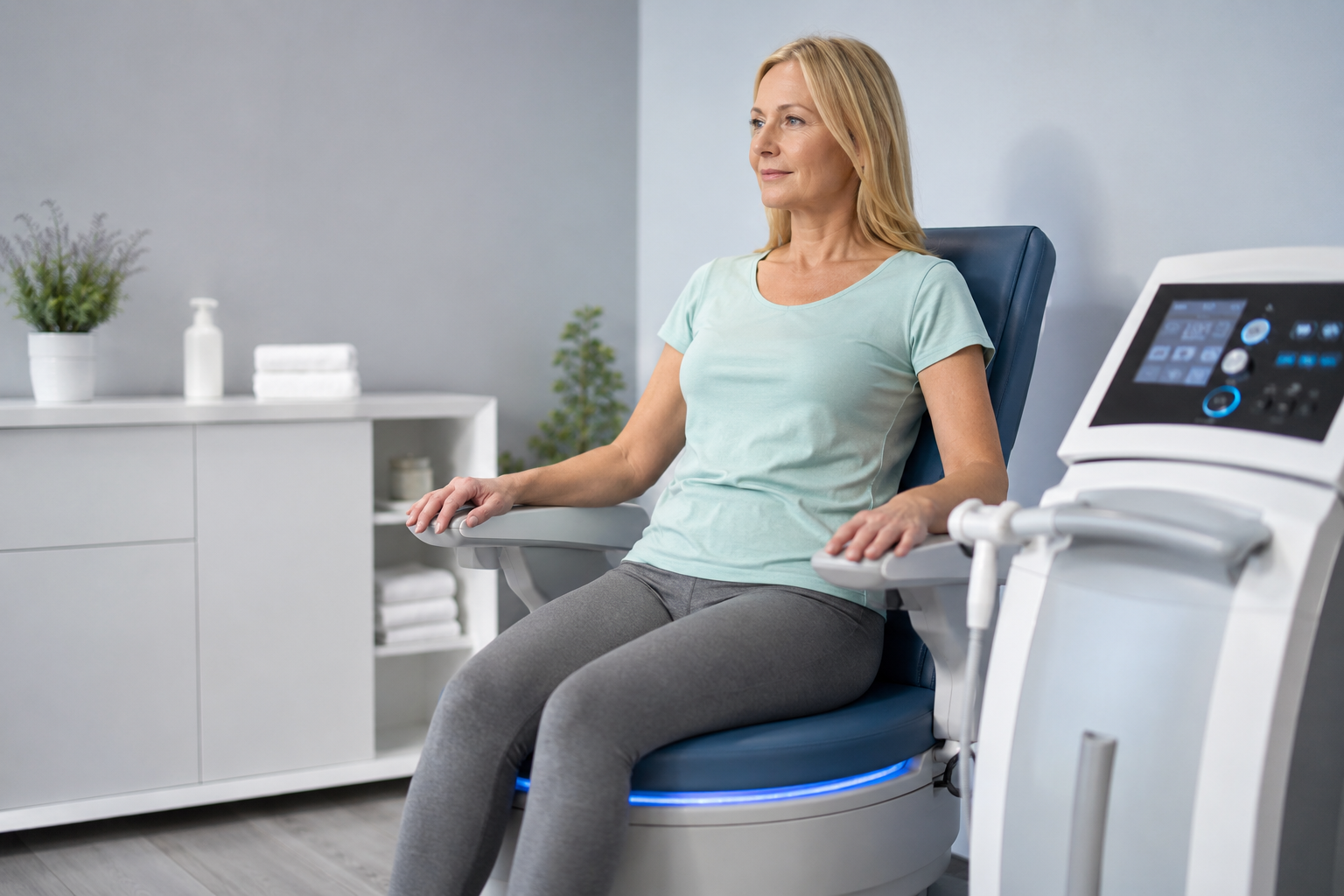
The treatment uses high-intensity focused electromagnetic energy to induce deep, powerful contractions in the pelvic floor muscles — effectively simulating an intensive programme of pelvic floor exercises within a single thirty-minute session. You remain fully clothed throughout and simply sit on the treatment chair. There are no needles, no anaesthetic, no undressing and no downtime.
Alongside general urinary incontinence, the same treatment is used to address stress incontinence, overactive bladder, faecal incontinence and erectile dysfunction. For a more detailed explanation of how the treatment works, who it may suit and what a typical course involves, see the Lipo Freeze 2U Incontinence Treatment information. It is also available as a home-based treatment, which for many people is the difference between seeking help and continuing to manage alone.
Why Pelvic Floor Strength Matters
The pelvic floor is a sheet of muscle that supports the bladder, the bowel and, in women, the uterus. When it is strong, it closes reliably under pressure — during a cough, a sneeze, a jump or a lift. When it weakens, that closure becomes unreliable, and small leaks begin to occur during ordinary daily activity. Over time many people adapt by planning their day around toilet availability, avoiding certain forms of exercise, or relying increasingly on disposable continence products.
Incontinence Treatment for Women
For women, the treatment offers pelvic tightening and toning alongside improved bladder control, which makes it particularly relevant after childbirth and through the menopausal transition. Pregnancy and delivery place sustained load on the pelvic floor, and the weakening that follows is a physical consequence rather than a personal failing.
Beyond bladder control, strengthening the pelvic floor supports the structures that hold the pelvic organs in position. Women who have been managing symptoms for years — sometimes decades — often describe the practical change as the most significant: fewer pads, less planning, less anxiety about being far from a toilet, and a return to activities that had quietly been abandoned.
Incontinence Treatment for Men
Men who complete a course of treatment develop stronger pelvic floor muscles, which reduces the symptoms of urinary incontinence associated with laxity in that muscle group. An enlarged prostate increases the risk of urinary incontinence in men, and pelvic floor exercises alone can only go so far in reducing a strong and sudden urge to reach a toilet. The treatment is suitable and safe for men and women alike, and the session experience is identical: fully clothed, seated, thirty minutes.
Effects on Intimate Health
A strengthened pelvic floor has effects beyond continence. In women, some report improvements in sensation and satisfaction, and in issues related to reduced libido, dryness or discomfort. In men, strengthening the pelvic floor is associated with improvements in rigidity and in control over timing. These are common reasons people seek the treatment, and they are discussed in complete privacy during consultation.
Course Length and Timing
A single treatment is possible, but a course of six to eight sessions is generally recommended for the best outcome. A common structure is two sessions per week over three weeks. Many people begin to feel a difference within the first few sessions, with improvement continuing to build over the following weeks. In many cases a maintenance session every three to twelve months is sufficient to sustain the result afterwards.
Vaginal Tightening Treatment
Vaginal tightening, sometimes described as intimate rejuvenation, is a non-invasive treatment that aims to improve the firmness, elasticity and structural integrity of the vaginal canal. Childbirth, ageing, hormonal change and weight fluctuation can all contribute to laxity and a loss of tone, and these changes are ordinary rather than unusual.
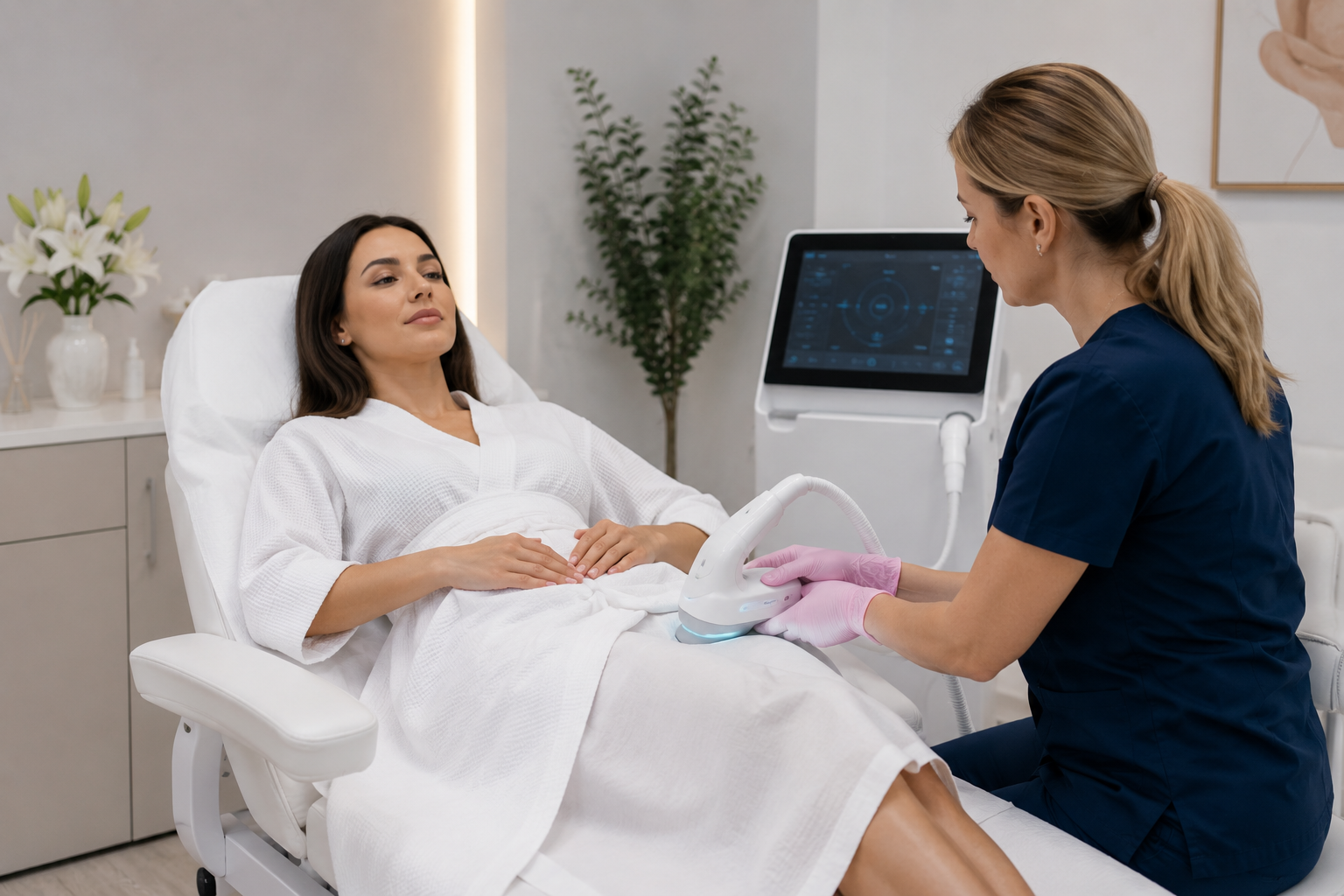
The treatment uses high-intensity focused ultrasound to heat the deeper layers of tissue in a controlled way without damaging the surface. That controlled heating stimulates the body's own production of collagen and elastin — the proteins responsible for firmness and elasticity — which supports improved tightness, better structural support and improved intimate function over the following weeks and months.
What Happens During Treatment
- Initial consultation. Your medical history is reviewed, your goals are discussed and your suitability for the treatment is established before anything is booked.
- Preparation. A topical cream is applied to keep the procedure comfortable.
- Treatment session. A specialised wand delivers focused ultrasound energy to the tissue, heating the deeper layers indirectly while leaving the surface undisturbed. A session takes around thirty minutes.
- Collagen activation. The focused energy stimulates natural collagen and elastin production, which is the mechanism by which structural support and elasticity improve.
- Recovery. Downtime is minimal. Mild soreness, slight swelling or occasional spotting may last a few days.
- Results. Improvements develop over several weeks as collagen builds, and are commonly reported to last from several months to a year or more.
What the Treatment Aims to Improve
- Tightness and elasticity of the vaginal walls through renewed collagen and elastin production
- Comfort and satisfaction during intercourse
- Natural lubrication, where dryness has followed hormonal change
- Mild stress urinary incontinence, through improved support to the pelvic floor
- Confidence and general wellbeing, which frequently follows improvement in function
Who It May Suit
The treatment is generally considered for women experiencing laxity following childbirth, mild stress incontinence, dryness associated with lower oestrogen levels, discomfort or altered sensitivity during intercourse, or a loss of collagen and tone associated with age or the menopause. It is not carried out during pregnancy, and certain medical conditions rule it out — these are established during consultation rather than assumed.
Comfort, Safety and Aftercare
Most people describe a warm or tingling sensation during treatment, and a topical numbing cream is applied to keep it comfortable. Afterwards, tenderness, slight swelling or spotting may last a few days. Intercourse should be avoided for twenty-four to forty-eight hours, or for as long as your practitioner advises, to allow the tissue time to settle. Keeping fluid intake up supports natural healing and collagen formation.
The Wider Range of Non-Surgical Treatments
Alongside the four principal treatments described above, a broader menu of non-surgical procedures is available. These are outlined here so that you have a complete picture of the options; full details for any of them are provided during consultation, where suitability, session count and expected outcome are discussed against your particular circumstances.
Cryotherapy for Skin Blemishes
Controlled cryotherapy applied through a fine-tipped device is used to treat a range of benign skin lesions and imperfections. Commonly treated concerns include skin tags, warts, verrucae, age spots, sun damage, milia, cherry angiomas, benign moles, seborrheic keratosis, actinic keratosis and dermatofibromas. Treatment is quick and targeted, and any lesion that is not clearly benign should be assessed by an appropriate medical practitioner before cosmetic treatment is considered.
Fat Dissolving Injections
Injectable treatment used to break down small, localised fat deposits that suit precise, contained pockets rather than broad regions.
HIFU Non-Surgical Facelift
High-intensity focused ultrasound applied to the face and neck to lift and tighten by stimulating collagen production in the deeper tissue layers. It targets laxity along the jawline, the cheeks, the brow and the neck without incisions or downtime, and results develop over the following months as new collagen forms. If you are considering this treatment, you can also review the current Lipo Freeze 2U HIFU Prices before arranging a consultation.
Advanced RF Microneedling and the Signature Skin Lift
Radiofrequency energy delivered through fine needles into the deeper layers of the skin, stimulating collagen and elastin production to improve texture, firmness and the appearance of scarring or fine lines. It is often chosen by people addressing skin laxity after significant weight loss, where the underlying tissue needs tightening rather than volume reduction.
Combining Treatments
These treatments are frequently combined, and combining them thoughtfully is often more effective than pursuing any one in isolation. Fat freezing and body toning address different layers of the same area — fat above, muscle below — and are commonly sequenced together. Incontinence treatment and vaginal tightening address related concerns through different mechanisms and are often discussed together.
Treatment at Home Across the United Kingdom
Every treatment described on this page can be delivered in your own home. A qualified practitioner brings the same professional-grade equipment used in clinic, follows the same clinical protocols, and delivers the same treatment. The setting changes; the standard of care does not.
This matters more than it might appear. Childcare commitments, shift patterns, limited mobility, distance from a clinic, or simply a preference for privacy are all entirely valid reasons why attending an appointment elsewhere is difficult. For the more personal treatments in particular — incontinence and intimate rejuvenation — being at home removes a barrier that stops many people seeking help at all.
What Happens at Your Consultation
Consultation comes before treatment, without exception. It exists to establish three things: whether a treatment is safe for you, whether it is likely to achieve what you want, and which treatment or combination makes the most sense for your particular situation.
The practitioner will review your medical history, including any conditions, medications, implants or previous procedures relevant to the treatment being considered. They will assess the area you are concerned about — its size, the character of the tissue, the condition of the skin — and explain honestly what can and cannot be achieved. They will describe the realistic timeline, the number of sessions likely to be needed, and the side effects and risks involved.
The quality of treatment also depends on the practitioners delivering it, which is why professional standards, training and experience matter throughout the process. If you are interested in becoming part of the team, you can find more information about Lipo Freeze 2U Careers and current opportunities.
Your body composition, medical history and goals are assessed individually rather than matched to a standard package.
Contraindications are checked before anything is booked. Where a treatment is not appropriate, you are told directly.
Timelines, session counts and likely outcomes are explained honestly, including what a treatment cannot achieve.
Every treatment can be delivered at home with the same equipment, the same protocols and the same practitioners.
Frequently Asked Questions About Our Treatments
It depends on what you are trying to change. If the concern is a localised fat deposit and you are near a stable weight, fat freezing is usually the starting point. If you want tone and strength as well as fat reduction, body toning addresses both. If the concern is bladder control or pelvic floor weakness, incontinence treatment is the relevant option. If it is intimate laxity, dryness or comfort, vaginal tightening is the treatment designed for that. A consultation establishes which applies, and whether a combination makes more sense.
No. None of them is a weight-loss treatment. They contour, tone, strengthen and restore. They work best for people who are already at or near a stable weight and who have specific localised concerns. Where someone is significantly overweight, a weight-management approach is the appropriate first step, and contouring can be considered afterwards for any areas that remain.
None requires an anaesthetic and none is described as painful. Fat freezing involves an intense cold and pulling sensation for the first five to ten minutes before the area numbs. Body toning feels like an intense workout. Incontinence treatment is carried out fully clothed and is generally described as comfortable. Vaginal tightening produces a warm or tingling sensation, with a topical numbing cream applied beforehand.
No significant downtime for any of these treatments. You return to normal activity immediately, including work, driving and exercise. Fat freezing may leave the area tender, red or numb for a few days. Body toning may leave the treated muscle feeling worked. Vaginal tightening may cause mild soreness or spotting for a few days, and intercourse should be avoided for twenty-four to forty-eight hours.
Fat freezing results typically begin to appear at three to four weeks, with the most pronounced change between eight and twelve weeks, and continued clearance for several months afterwards. Body toning generally produces noticeable strength and muscle change within two to four weeks of a completed course, with fat reduction visible around three months. Incontinence improvements are often felt within the first few sessions and continue to build. Vaginal tightening develops over several weeks as collagen forms.
Yes, and combinations are common. The important consideration is sequencing — spacing treatments so that each has time to take effect makes the plan more effective and makes it far easier to understand which treatment produced which change. A combined plan is put together at consultation.
It varies by treatment. Fat cells destroyed by cryolipolysis or body toning do not return, so that element is durable — but the remaining fat cells in the area can still enlarge if weight is gained. Muscle gains from body toning fade over time without ongoing activity. Vaginal tightening results are not permanent and maintenance sessions may be recommended. Incontinence results often last a considerable time, with occasional maintenance sessions where needed.
Yes. A qualified practitioner brings the same certified equipment and follows the same protocols used in clinic. The consultation and screening process is identical. Nothing about the treatment is reduced or simplified for a home setting.
Choosing Well Rather Than Choosing Quickly
If you have read this far, you already know considerably more than most people do at the point of booking. You can see how each treatment works, what the sessions involve, what the timelines look like and where the limits sit. The next step, whenever you are ready, is a conversation in which all of it is applied to your particular circumstances. You can read about the outcomes people typically see on the results page, review current treatment costs on the prices page, or find out more about the practitioners and standards behind the treatments on the choose us page.